Why Nvidia and other AI stocks fell in the week Anthropic went public
Nvidia beat forecasts and Anthropic raised a record $93.5 billion, yet AI shares sank as borrowing costs rose and Nvidia’s leadership crisis deepened.

Summary


On November 17, Nvidia reported third-quarter revenue of $115.8 billion, about $6.7 billion above the LSEG analyst consensus, and forecast $130 billion for the current quarter, also above it, CNBC’s report on the results showed. Three days later the shares closed the week down 23%.
Anthropic, the maker of the Claude models, went public the same week at $83 a share in the largest initial public offering on record, a sale that reached $93.5 billion with the underwriters’ full allotment, its closing announcement shows. By the close on November 20, its second day of trading, the stock stood at $88.91, about 7% above the offer price after giving back much of a 17% first-day gain.
The Nasdaq Composite lost 10.0%, its steepest weekly fall since March 2020, and ended the week below where it began the year, closing prices from Yahoo Finance show. The S&P 500 and the Dow Jones Industrial Average each closed more than 11% below their records, past the 10% mark that traders call a correction.
Both companies had just reported record revenue, and their shares fell anyway. The week repriced what the AI buildout costs to finance and how far investors trust the people running it, as a Federal Reserve preparing to raise rates, a governance and legal crisis at Nvidia, and a record supply of new Anthropic stock arrived within five trading days. Demand, on the figures the companies reported, held. The next test comes on December 8 and 9, when the Fed meets.
Nvidia beat its forecast and lost 23% in a week
The selling started before the report and outlasted it. Nvidia’s shares fell 2.9% on November 18, the first session after the results, and by then had lost 13% in a week. On November 20 they dropped 14.0%, their steepest one-day fall since January 27, 2025, when a low-cost model from the Chinese startup DeepSeek set off a rout in chip stocks. The stock ended the day 39% below its level at the end of October.
Colette Kress, Nvidia’s interim chief executive, said on CNBC’s “Mad Money” on the evening of the results that hyperscalers, the largest cloud operators, were urgently looking for more computing capacity. “This concept that anything is changing in terms of any of our types of customers, that is just not true,” she said. Nvidia’s forecast assumes no data center computing revenue from China.
Other companies that sell or rent AI hardware fell as hard. Micron lost 23.6% over the week and AMD 20.5%. Neoclouds, companies that rent out GPU capacity and borrow heavily to build it, fell further, with CoreWeave down 25.6% and Nebius down 29.8%. The VanEck Semiconductor ETF, a fund that holds the largest chipmakers, lost 17.8%.
Nvidia fell in line with other AI hardware stocks
Change in closing price, November 13 to November 20, 2026, %
Data
| Label | Weekly change |
|---|---|
| Nebius | −29.8% |
| CoreWeave | −25.6% |
| Micron | −23.6% |
| Nvidia | −22.9% |
| AMD | −20.5% |
| VanEck Semiconductor ETF | −17.8% |
| Nasdaq Composite | −10% |
| S&P 500 | −8.6% |
| Dow Jones Industrial Average | −8% |
A resignation and an SEC probe belong to Nvidia alone
Over the whole month the picture is different. From the end of October to November 20 Nvidia lost 38.7%, against 32.8% for Micron, 23.4% for the semiconductor fund and 15.9% for AMD. Part of that gap belongs to a crisis no other AI company shares. Jensen Huang, who co-founded Nvidia in 1993, resigned as president, chief executive and director on November 12, the company’s announcement said, and Kress, the chief financial officer, became interim CEO.
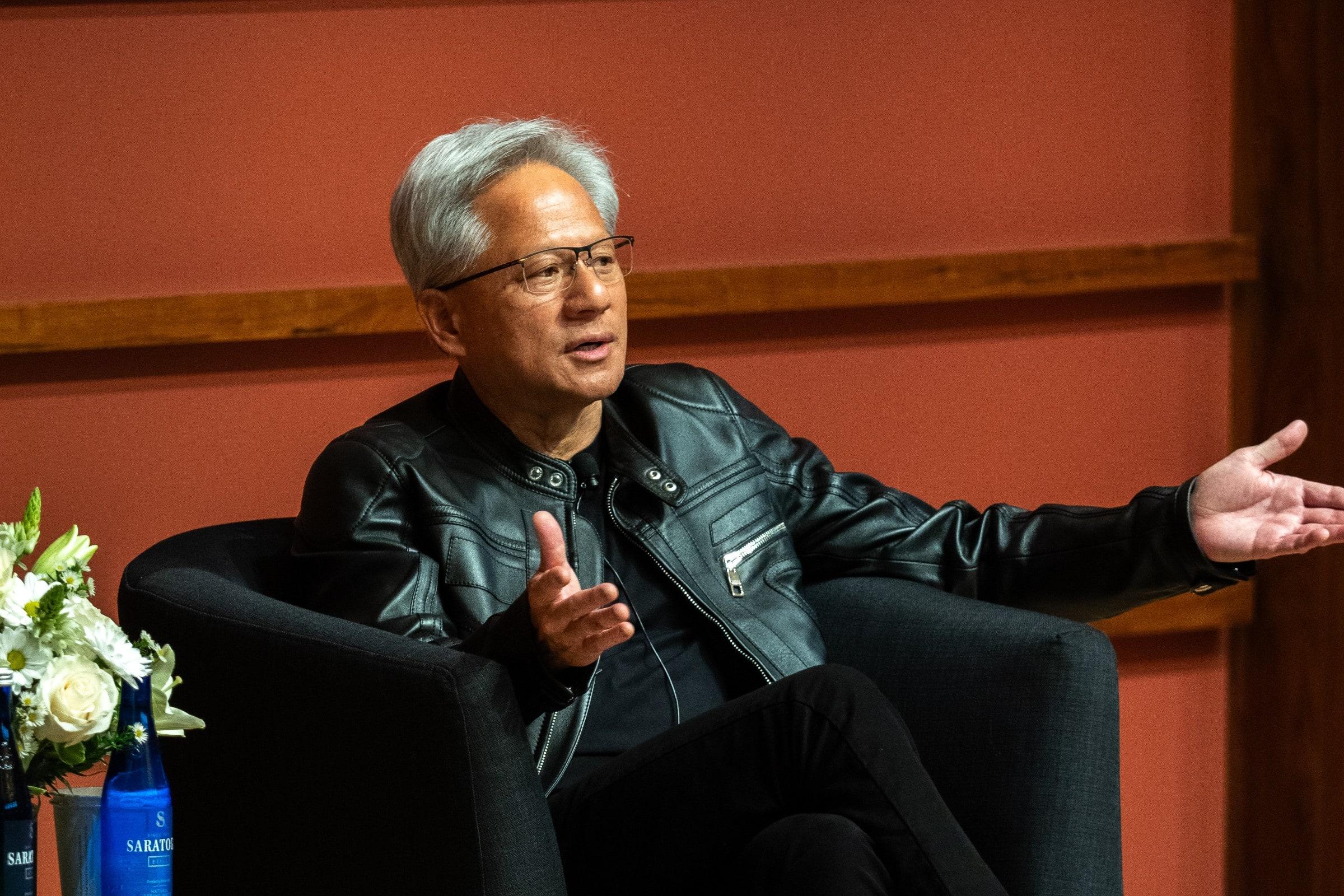
The board gave its reason five days later. Harvey Jones, a director since 1993 whom the board named its first chair, told analysts on November 17 that Huang resigned “after disclosure of personal behavior inconsistent with the company’s code of conduct, standards and cultural norms,” according to a transcript of the earnings call, and that the board does not intend to reinstate him. The board had opened an independent investigation on November 8 into reports that Huang was the target of a foreign intelligence effort, after he told employees he had been unfaithful to his wife.
Regulators moved in the same days. The Commerce Department issued a rule on November 16 to stop Chinese companies from using advanced chips remotely through data centers in other countries. California Attorney General Rob Bonta subpoenaed Nvidia on November 19, asking whether its chips or confidential information reached China and whether it misled investors. “Nvidia is in a messy, transnational situation but the underlying principle of our corporate securities law is clear: Companies cannot mislead their investors,” Bonta said.
Accounting questions followed. On November 20, Reuters’ report, citing two people briefed on the matter, said the Securities and Exchange Commission is examining Nvidia’s accounting practices. The SEC declined to comment and Nvidia did not respond to Reuters’ requests. Such investigations are not evidence of wrongdoing and many close without enforcement action, Reuters noted. Nvidia has said its 10-Q, the detailed quarterly filing that usually accompanies results, will come “in the coming weeks,” and its results release refers to an ongoing investigation by an independent committee of the board.
A founder’s exit, a federal inquiry and a state subpoena are risks particular to one company. They help explain why Nvidia has fallen further than its peers since October, and they leave open why Micron and the neoclouds fell just as hard in the week of November 16.
A Fed ready to hike raised the cost of the buildout
The pressure that reached every AI company came from interest rates. The Fed raised its benchmark rate by a quarter point in September, its first increase since 2023, and held it at 3.75% to 4% on October 28 over two dissents in favor of another increase. The 10-year Treasury yield, the reference for long-term borrowing costs, closed above 5% from November 12 through November 19 and slipped to 4.91% on November 20, the day stocks fell hardest.
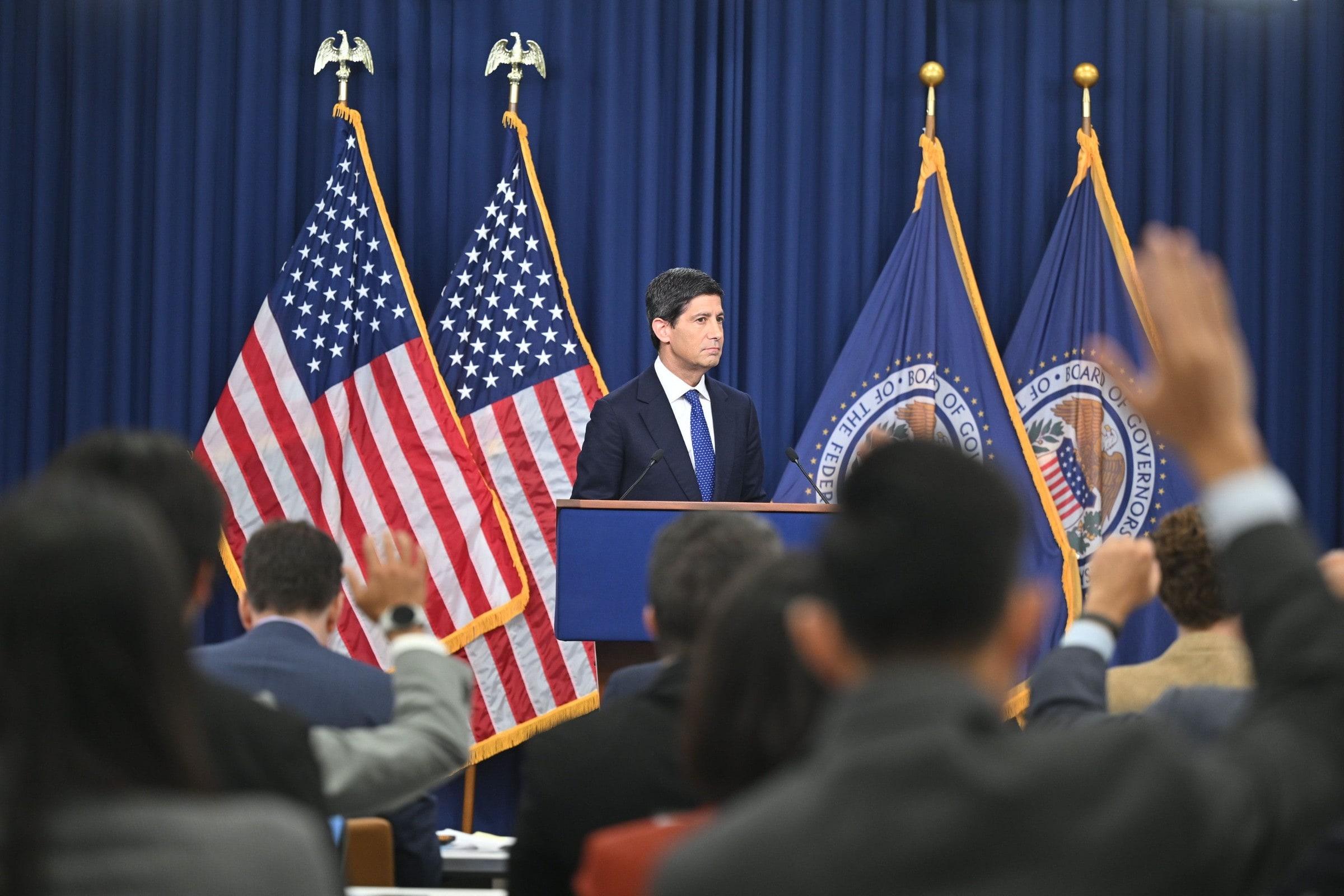
Fed officials spent the week signaling more. Christopher Waller, a Fed governor, told CNBC that a half-point increase may be needed in December. “I’m very, very concerned about inflation. It’s kind of headed in the wrong direction, and it’s spreading out,” he said. Anna Paulson, president of the Philadelphia Fed, said on November 19 that rates need to go higher.
Higher rates fall hardest on companies that borrow to build. The yield on CoreWeave’s 2032 bond had climbed above 16% in early November, after Democrats won governor races in Texas, Ohio and Georgia, states that hold much of the planned US data center capacity. CoreWeave’s shares closed on November 20 at $39.51, 78% below their June 2025 record. Luke Lango, who edits the Innovation Investor newsletter, wrote that SpaceX had to raise the yield on a $32 billion debt sale to 8.3%, which he read as the “capital spigot” closing for weaker borrowers such as CoreWeave and Nebius, according to Fortune’s account of the day.
Anthropic’s obligations show how long such commitments run. Its final prospectus puts its purchase and lease commitments, nearly all for computing, at about $900.9 billion, of which $70.7 billion falls due within a year of September 30 and about half before the end of 2030. About $186.2 billion, roughly a fifth, can still be terminated or depends on conditions such as the other party securing financing.
The money also runs in a circle. Seven suppliers and partners, led by Google and Nvidia with $10 billion each, bought $26 billion of Anthropic stock at the IPO price, while Anthropic runs Claude on chips from Nvidia, Google, Amazon and AMD. Nvidia’s holdings in private companies reached $65.5 billion at the end of its third quarter, up from $22.3 billion in January, and it has guaranteed up to $118 billion of its partners’ obligations. That overlap suggests a rise in the cost of capital reaches the buildout’s suppliers, customers and investors at once, because they are often the same companies.
Anthropic sold a record $93.5 billion into a falling market
Anthropic priced its shares on November 18 at $83, above its $70 to $78 range, and enlarged the sale to 980 million shares from a planned 825 million. Underwriters then bought another 147 million, and with the private placement the sale raised about $119.5 billion before fees. Each of the seven co-founders sold 3.38 million shares, $1.96 billion in total. At the offer price the roughly 13.4 billion shares outstanding were worth about $1.1 trillion, and CNBC put the fully diluted value, which also counts shares not yet issued, at about $1.5 trillion. ainews.today uses Anthropic’s models as a research tool.

CNBC described the debut as a possible “sell the news” moment for the AI trade, a chance for early holders to cash out. On November 19 the stock opened at $111.50, touched $115.10 and closed at $97.17. The next day it fell as low as $83.05, a nickel above the offer price, before closing at $88.91, down 8.5%.
Anthropic’s filings show a loss produced mostly by accounting, with revenue still climbing. For the nine months to September 30, revenue was $33.2 billion, 13 times the figure a year earlier, and the net loss was $104.0 billion. Of that, $94.3 billion, about 91%, came from changes in the fair value of convertible notes and similar instruments, debt that turns into shares and was revalued as the company’s worth rose. The operating loss was $1.26 billion. Run-rate revenue, an annualized figure built from recent usage and subscriptions, was about $81 billion at the end of October, up $10 billion in a month.
Anthropic’s growth rate fell from 144% to 47%
The strongest case against the view that demand is intact starts with Anthropic’s own figures. Revenue grew 47% from the second quarter to the third, after 144% the quarter before, and momentum trades such as the VanEck Semiconductor ETF peaked in June. Democrats won both chambers of Congress on November 3, and with them came speculation about stricter rules on data center construction. On November 20 President Donald Trump threatened a “tremendous tax” on US companies that build data centers abroad, CNBC reported.
Anthropic’s revenue kept rising as its growth rate slowed
Quarterly revenue, $ million, first quarter 2025 to third quarter 2026
Data
| Label | Revenue |
|---|---|
| Q1 2025 | $376M |
| Q2 2025 | $787M |
| Q3 2025 | $1,382M |
| Q4 2025 | $2,040M |
| Q1 2026 | $4,731M |
| Q2 2026 | $11,555M |
| Q3 2026 | $16,956M |
Analysts on that side expect more losses. Jay Goldberg of Seaport Research began coverage of Anthropic at neutral, writing that the company will need time to grow into its valuation, and James Reilly, senior markets economist at Capital Economics, expects the S&P 500 to fall to 6,500 by the end of 2027. Benedicte Lowe, an equity derivatives strategist at BNP Paribas, told CNBC that investors were “panic selling” as they tried to judge whether enthusiasm for AI had peaked. The record of past corrections gives them some support. An E*Trade study of the 14 corrections since 1983 found that five became bear markets and that the median total drop from the record was 19.9%.
The figures that support the bears also limit their case. Anthropic’s quarterly revenue still grew by about $5.4 billion in the third quarter, more than the company took in during all of 2025, and Nvidia guided above consensus. Binky Chadha, a Deutsche Bank strategist, called the market very oversold and said growth and earnings remained strong. Chris Larkin, head of trading at E*Trade from Morgan Stanley, said that “given the solid economic and fundamental backdrop, the move appears to be highly sentiment driven.”
Jeremy Siegel, the Wharton professor, told CNBC that investors had come to treat annual returns of 15% to 20% as the norm because of AI, and that those expectations had to come down. The week’s evidence supports two of the bears’ points, slower growth rates and a sharp rise in the price of money. None of it shows customers buying less.
The Fed meets on December 8 and 9. Futures put the odds of a rate increase at about 95%, according to CME FedWatch, and Nvidia has yet to file its quarterly report.