Fans use Claude to port games to the browser, and publishers push back
Claude Opus 5.5 can turn a game’s machine code into a browser port in a day. Which ports stay online depends on what they ship and whose name they use.

Summary
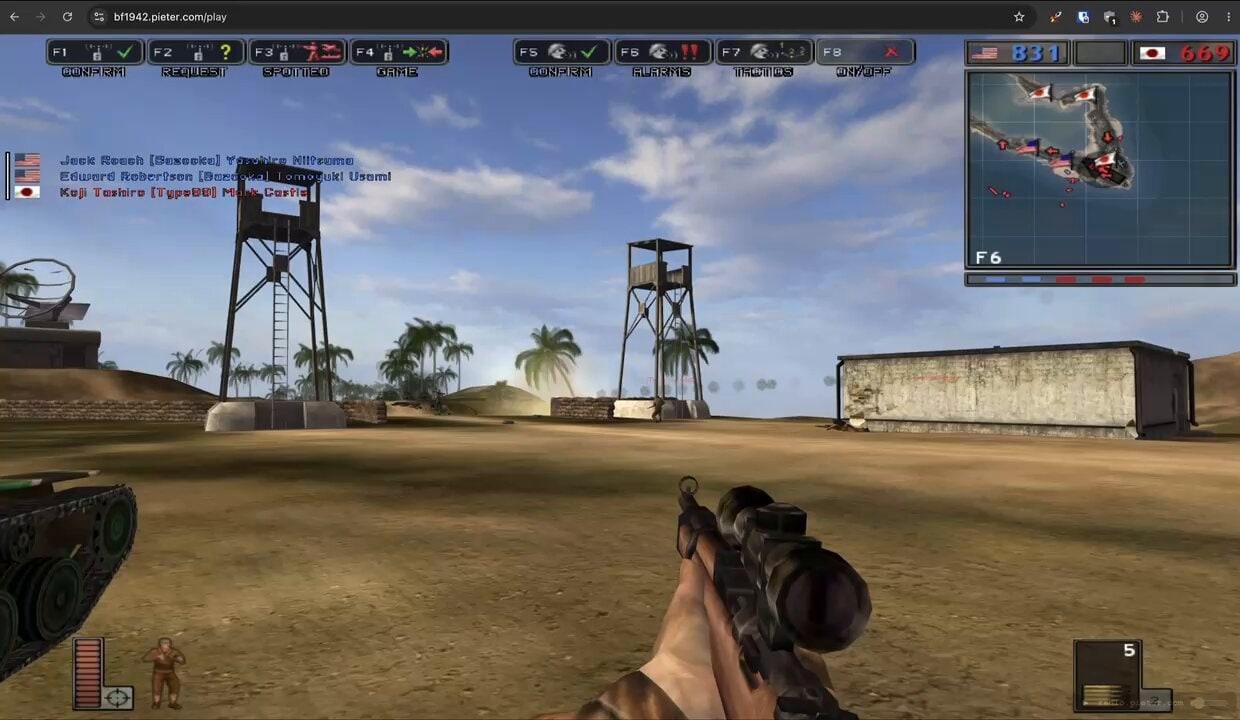
On November 2, Pieter Levels, the independent developer behind Nomad List and Remote OK, described in a blog post how he had put Battlefield 1942 online as a multiplayer game playable in a browser. He had tried six months earlier and given up. This time he gave Claude Code, Anthropic’s coding agent, one request: “can you try port the BF1942 demo in this folder to web.”
By his count, the agent, running Anthropic’s Opus 5.5 model, broke the game’s x86 machine code into 57,000 functions, translated each into C and compiled the resulting 100,000 lines to run in a browser tab, all in a day. His launch post on X carried a qualification in parentheses: “(It’s the free shareware demo).”
The port came at the end of a wave. Kotaku reported on October 9 that hundreds of AI-decompiled games and emulators had appeared in a couple of weeks, and credited Opus 5.5, which Anthropic released on September 22. Publishers have responded. One developer said Activision had sent him a DMCA takedown, a removal demand under US copyright law, over Call of Duty ports, and another said ZeniMax Media had sent a cease-and-desist over his browser Fallout game.
Those events mark the limit of the refrain that spread with the wave, that all games are now open source. Opus 5.5 has made translating a game’s machine code into a working browser port the work of a day. It has left untouched the question of who may distribute the result. The record so far suggests that what a port ships, and whose name it carries, decides whether it stays online. On November 15 Levels’ port was still up.
Battlefield 1942 went from binary to browser in a day
Decompilation, rebuilding readable source code from a compiled program, has taken fan teams months or years per game, according to heise’s report on the wave. Levels’ agent worked mechanically instead. In his example, the x86 instruction “mov eax, [esi+0x110] becomes eax = READ32(esi + 0x110),” and he added, “I have no idea what any of this means btw.”
The C code went through Emscripten into WebAssembly, a format that lets compiled programs run inside a browser. About 300 Windows and Direct3D calls, the system and graphics functions the game expected from a PC, were rewritten for WebGL 2, the browser’s graphics interface, and a WebSocket network stack connected players to a multiplayer server. On November 4 Levels wrote in a post on X that the game now ran on phones and that “Claude Code built its own graphic layer that translates Direct3D (DirectX) instructions to WebGL.”
He called it far harder than his earlier ports. Quake and DOOM “already had lots of open source projects and work behind them.” Battlefield 1942, he wrote, had “literally absolutely nothing to work on top of,” with no earlier port and no open-source engine.
That makes the result a translation of the original machine code. It sits closer to what the reference site Retro Reversing calls static recompilation, which can “mechanically translate machine instructions to host code without recovering the original algorithms,” than to a rebuilt game. The function and line counts are Levels’ own.
The demo was only the starting point. On November 4 Levels wrote in another post that he had upgraded the game and its server “from v1.0 (the demo) to v1.61 (the latest version),” which took another round of decompiling, and raised the limit to 64 players. The site describes itself as a non-commercial, unofficial preservation project with no affiliation to Electronic Arts, the game’s publisher, or DICE, its developer, and says Battlefield 1942 was released as freeware in 2012.

Hundreds of ports followed, many built on older work
Not every port in the wave is new engineering. According to heise, the browser version of Halo: Combat Evolved that Mitchell Hynes released at the end of September builds on decompilation projects other developers had run for longer, and players must load an image of their own Xbox disc. “It is often unclear how much AI is involved in the individual projects,” heise wrote.
Where a model does the work, its quality depends on the test applied. Retro Reversing separates code that looks plausible, code that behaves correctly and code that compiles to the same bytes as the original, and notes that a language model “does not intrinsically prove that its output is correct.” The guide cites Retrobench, built by Sinan Onur Altinuc, which gives a model assembly code and a historical Nintendo 64-era compiler and scores how closely its C reproduces the original bytes.
On the version the guide checked on October 15, Opus 5.5 matched three of five targets exactly and averaged 98.4%, against 81.6% for its predecessor, Opus 5. By November 15 the leaderboard listed two newer models, Anthropic’s Claude Fable 5.2 and Google’s Gemini 4 Carbon, at 99.9%. The targets are five pieces of code, and the score does not measure the share of a whole game recovered.
Models from three vendors now reproduce the test code almost byte for byte
Mean byte match with the original compiled code on Retrobench v0.4.13, %
Data
| Label | Mean byte match |
|---|---|
| Claude Fable 5.2 | 99.9% |
| Gemini 4 Carbon | 99.9% |
| Claude Opus 5.5 | 98.4% |
| GPT-6.1 Sol | 94.9% |
| GPT-6 Astra | 94.3% |
| Gemini 4 Argon | 84.7% |
| Claude Sonnet 5.5 | 84.2% |
| GLM-5.3 | 80.2% |
| Kimi K3 | 79.5% |
A whole game is a different order of work. Maurice Heumann spent three months and more than 500 billion tokens, the units of text a model reads and writes, rebuilding the source code of the 2009 PC version of Call of Duty: Modern Warfare 2, with 17 agents running in parallel by the end, Tom’s Hardware reported on October 12 from his account of the project. By then 83% of the game’s functions matched the original byte for byte. The agents’ first month of code was readable and “semantically wrong,” he wrote, until he added an automated byte-level check.
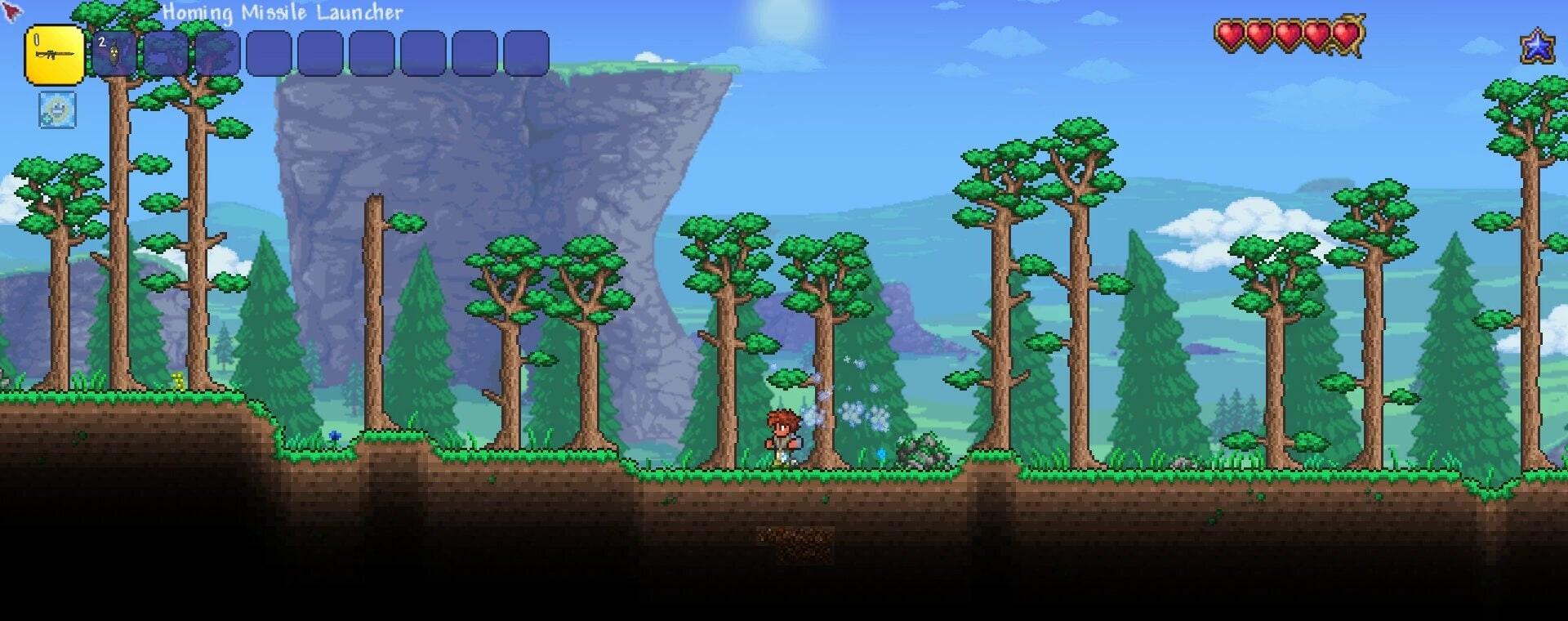
The developer Rehan Sheikh took another route. On September 28 he wrote in a post on X that he had “pointed opus 5.5 at terraria last night” and woken up to “a fully working reverse engineered version.”
Takedowns follow what a port ships and whose name it uses
The notices so far have landed on specific projects. Luckey Faraday built browser versions of Call of Duty: Black Ops II multiplayer and of a Black Ops Zombies map. TweakTown’s report on the takedown on October 11 quoted his post on X: “Activision just DMCA’d me for porting CoD games to the browser.” Both project pages said their maps, models and animations had been exported from the original PC games, according to the report, which added that Activision had neither published the notice nor commented.
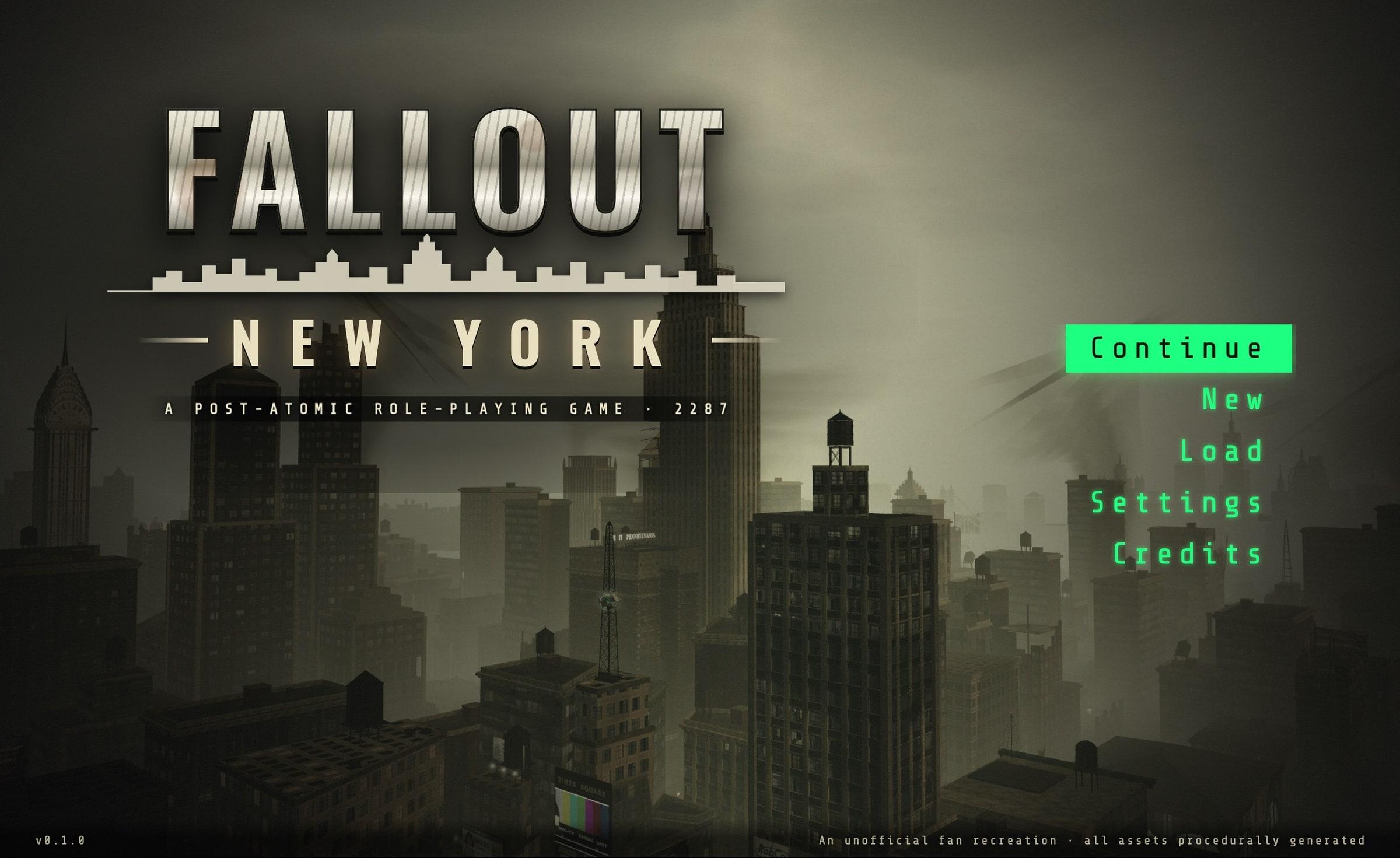
Chris First presented Fallout: New York on September 28 as a browser Fallout game built with Opus 5.5: “Zero texture files. Zero sound files. Every building, weapon, face and sound is generated by code.” Three days later he said he had received a cease-and-desist from ZeniMax Media, Bethesda’s parent company, and wrote that “the suits got involved and the fun is over,” Rock Paper Shotgun reported. The notice appeared to turn on the project’s fallout.nyc domain, the site wrote, adding that it had asked Bethesda for comment.
Heumann’s project met a similar response. The video in his September 30 post on X was disabled after a report by the copyright owner, and two of his earlier blog posts about the project have been removed, according to Tom’s Hardware, which said no comment from Activision was on record.
Each was a demand from a rights holder or an action by a platform, and none came from a court. The line they enforce is older than the model. In May 2020 a law firm that has represented Nintendo filed a DMCA complaint that removed footage of a fan-made PC port of Super Mario 64 and the links to download it, according to GameSpot’s report at the time.
Fan decompilers have long relied on a different practice. Projects such as the GoldenEye 007 decompilation require players to extract the game data from their own copy, heise noted, and Hynes’ Halo site asks for a disc image. Many of the new ports skip that step and “can be started directly and without detours,” in heise’s words. What is known about the two takedowns fits that divide. Faraday’s ports shipped assets exported from the games, and First’s used the Fallout name and a Fallout domain even though its contents were generated in code. That pattern points to what publishers weigh, which is what a port distributes and under whose name.
The case that takedowns cannot keep pace
The strongest argument against that reading comes from the people building with these tools. Sheikh wrote on September 28 that “all games are effectively open source atp, opus can reverse engineer any game effectively by faking controller/keyboard inputs and observing state!” Given enough instances and compute, he added, any game could be reverse engineered.
On October 4 he followed with a post introducing an essay on what that means for the industry, headed “All games are open source now!” His method rebuilds a game from its observed behavior, a different act from translating its machine code as Levels did, and his posts describe it on one game, Terraria.
Eric S. Raymond, the open-source pioneer, had long counted games among the areas where closed software would last longest. If AI can transform games back into source, he wrote, nothing would be safe from reverse engineering anymore, heise reported.
Vendor limits may not hold either. Game Developer’s report on the Claude Code rule said it “may only deter the most low-effort copycats,” and noted that users replying to the post that exposed it had pointed to open-weight models, whose weights anyone can download and run and which carry no such restriction. The Retrobench board shows that the skill is no longer confined to one vendor’s model. Kotaku’s Lewis Parker called the publishers’ position “IP protection whack-a-mole on a scale I don’t think we’ve seen since the advent of pirated DVDs.”
The record supports part of this case. Levels’ port shows that a game with no earlier engine can be translated in a day, and his site was still serving players two weeks later. What the notices have removed is specific material, one project at a time.
Anthropic and the hobbyists draw their own lines
The rule surfaced on October 30, when an X user called Chasm wrote in a post that Claude Code had picked it up around October 27 from Anthropic’s servers and that no setting turns it off. It reads: “Do build original games, games in a genre, and games from the user’s own designs and assets. Don’t build a recreation of a specific existing game, even if it is renamed or called original.” ainews.today uses Anthropic’s models as a research tool.
Addy Osmani, a member of Anthropic’s technical staff, wrote on X the same day that the company had added the two sentences to Claude Code’s prompt “because using Claude to infringe IP is against our usage policy,” and that original games, genre games and games built from users’ own designs and assets “are meant to keep working.” His statement does not mention decompiling a game the user owns.
Parts of the hobby draw lines for reasons that have little to do with law. In early October DarioSamo, who leads Banjo: Recompiled, an unofficial PC version of Banjo-Kazooie, distanced himself from an AI-made port of Banjo-Tooie built on his team’s tools. “These are old and beloved games that have been available in numerous ways for decades, so there’s no rush to be the first to provide a solution using these tools,” he wrote on Bluesky, in a post quoted by heise.
Moderators of the r/opensource subreddit barred projects that use AI on October 24, according to Gizmodo’s report, which described AI decompilation as producing “a flood of more legally questionable projects.” “AI, as it exists today, is incongruent to this Open Source community,” the moderator Wolvereness wrote.
The worry has reached studios whose games are not yet out. Digital Sun Games was one of several studios to cancel a public playtest, in its case of the upcoming ReVamp, for fear that someone might feed the demo into an AI tool and release their own version, Game Developer reported. Levels started from a free shareware demo. Digital Sun Games chose not to hand one out.